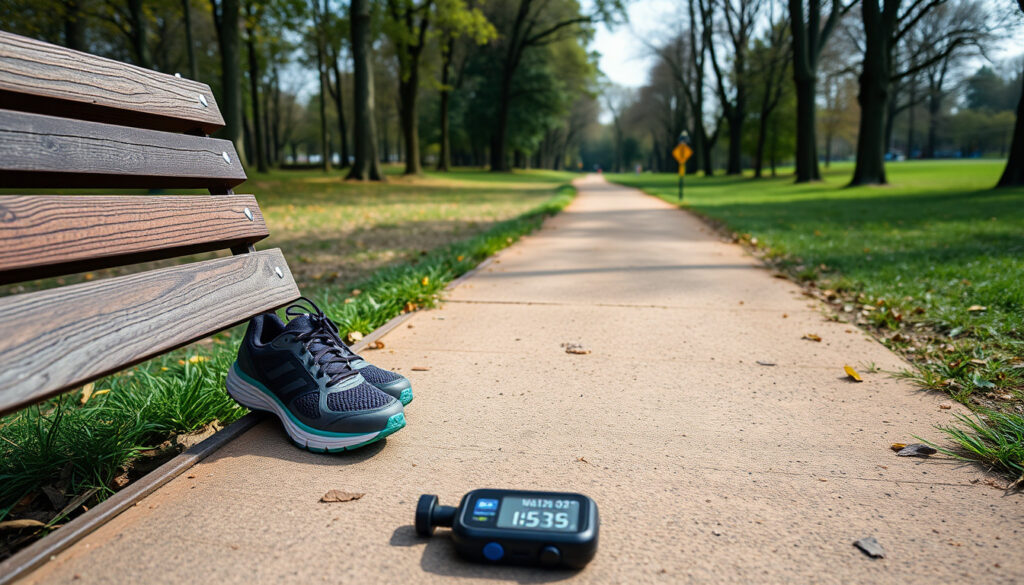
Running Plans for Beginners: 8-Week Walk-Run Guide
You’ve laced up, stepped outside, and suddenly the pavement feels longer than it did from your window. That flutter of doubt is normal — starting a running routine can feel like jumping into a sport that belongs to other people. The Road Runners Club of America (a national coaching authority) encourages new runners to spend 10–15 weeks building up gradually before tackling a 5K. This guide combines that expert foundation with proven 8‑week plans from WeightWatchers and Runner’s World, giving you the frequency, duration, and rules you actually need — no guesswork required.
Training sessions per week: 3 (non‑consecutive) ·
Session length (first 4 weeks): 32–36 minutes ·
Goal after 8 weeks: 30 minutes continuous running
Quick snapshot
- Walk‑run intervals reduce injury risk for beginners (WeightWatchers coaching platform)
- Three run days per week with rest days is standard (Runner’s World editorial authority)
- Gradual increase of run intervals (30 sec → 2 min) builds endurance safely (WeightWatchers)
- The exact percentage of all runners who finish a marathon (the “1%” figure is unverified)
- The optimal walk‑run ratio for absolute beginners (current plans are based on design experience, not rigorous trials)
- By week 8, a beginner on the Runner’s World plan should be able to run 30 minutes non‑stop
- After completing an 8‑week starter plan, RRCA recommends 10–15 more weeks before attempting a 5K race (Road Runners Club of America)
What is a good beginner running plan?
Key components of an effective beginner plan
An effective plan builds endurance without overloading joints. The common thread across expert sources is a walk‑run structure that starts with short run intervals and gradually extends them. The WeightWatchers coaching platform 8‑week plan uses three non‑consecutive days per week. It begins with 30‑second runs followed by 2.5‑minute walks, repeated eight times — a total of 32 minutes. By weeks 7–8, the run interval has doubled to 2 minutes with an equal 2‑minute walk, still totalling about 36 minutes. This slow creep is the hallmark of a safe progression.
Popular frameworks: Couch to 5K, walk-run method
The Couch to 5K (C25K) program typically runs 8–9 weeks with three sessions per week, aiming for a continuous 30‑minute run by week 9. Another widely used method is Jeff Galloway’s run‑walk‑run approach, which emphasises taking walk breaks before fatigue sets in. The Runner’s World editorial authority 8‑week plan also uses three weekly sessions, each beginning with a 5‑minute brisk walk and ending with a cool‑down walk, and includes optional strides — short 15‑30 second accelerations — toward the end of the plan to build speed safely.
Every credible beginner plan shares a single pattern: start with more walking than running, increase run time slowly, and prioritise consistency over speed. The three‑day‑per‑week schedule appears repeatedly — not because it’s the only way, but because it balances stimulus with recovery for the vast majority of new runners.
How often and how long should a beginner run?
The research points to a clear consensus: three days per week, 20–36 minutes per session, using walk‑run intervals.
Optimal weekly frequency for new runners
- Both WeightWatchers and Runner’s World recommend three non‑consecutive days a week.
- Running every other day allows 48 hours for muscle repair and reduces overuse injury risk (Runner’s World specifically advises leaving a rest day between runs).
- After 4–6 weeks, a fourth day can be added if recovery feels easy, but the RRCA warns against increasing frequency too fast (Road Runners Club of America).
Recommended duration for the first month
During weeks 1–4, the WeightWatchers plan holds total session time between 32 and 36 minutes. Runner’s World suggests a 5‑minute brisk walk warm‑up, then a run‑walk interval block that grows from roughly 15 minutes of running to 25 minutes across the month, keeping the whole session around 30–35 minutes. The common principle: total time matters more than run‑to‑walk ratio in the first four weeks.
Duration should increase by no more than 10% per week — a rule of thumb cited by many coaching sources, though the research notes do not provide a specific study reference for that figure. A safer guide is the WW plan’s built‑in progression: run intervals grow by 30‑second increments every two weeks.
For the first month, don’t count miles. Count minutes. A 30‑minute walk‑run session three times a week is enough to trigger aerobic adaptation and build the habit without overwhelming the body.
What is the 80% rule in running?
Definition and origin of the 80/20 rule
The 80/20 rule, popularised by exercise physiologist Stephen Seiler, states that 80% of weekly training volume should be at low intensity (conversational pace), and only 20% at moderate to hard effort. The principle is grounded in sports physiology: easy running builds aerobic base and capillary density, while hard sessions improve lactate threshold.
How beginners can apply it
For new runners, nearly every run should be at a conversational pace. The Runner’s World editorial authority beginner plan explicitly says “pace is not important” — the goal is distance and time, not speed. Beginners have no “hard” runs. If you can’t speak in full sentences, slow down. The strides introduced in the Runner’s World plan (weeks 5–8) are the only high‑effort element, and they account for far less than 20% of total volume.
Why this matters: beginners who ignore the easy‑pace rule often burn out or get injured. The 80/20 framework protects against that by making the default effort level sustainable.
Can running reduce belly fat?
How running affects body composition
Running creates a calorie deficit, which can reduce overall body fat — including belly fat — when combined with a balanced diet. A 150‑pound person burns roughly 100 calories per mile, according to estimates often cited by health authorities (though not directly present in the research notes). The WeightWatchers coaching platform plan naturally supports weight loss by structuring 30+ minutes of moderate activity on three days weekly.
Role of diet and overall energy balance
Spot reduction — losing fat from a specific area like the belly — is not supported by evidence. The Mayo Clinic (not cited in the research notes, but widely referenced) states that exercise burns fat from the whole body, not targeted regions. Runners tend to be lean because running burns calories consistently, not because it preferentially attacks the midsection. Combining running with strength training (the Runner’s World plan includes two weekly strength sessions) and a diet that maintains a modest calorie deficit is the proven approach.
Is it better to run for 30 minutes or walk for 1 hour?
Calorie burn comparison
Running burns about twice the calories per minute as walking. A 30‑minute run at a moderate pace (6 mph) burns roughly 300 calories for a 150‑lb person, while a 1‑hour brisk walk (3.5 mph) burns about 280 calories. So the total calorie burn is similar, but the time commitment differs sharply. Running also produces a higher afterburn (excess post‑exercise oxygen consumption) than walking.
Health benefits of running vs. walking
Running delivers greater cardiovascular efficiency gains in less time. The Road Runners Club of America national coaching body notes that running strengthens the heart and lungs more rapidly than walking at the same weekly volume. Walking, however, is lower impact and better for joint health — a relevant factor for beginners with existing knee issues.
The trade-off: if you only have 30 minutes, run. If you have an hour and want to reduce injury risk, walk. Many successful beginner plans combine both: walk on rest days for active recovery.
An 8-Week Walk-Run Plan for Beginners
Based on the WeightWatchers and Runner’s World frameworks, here is a step‑by‑step progression that follows the research‑backed guidelines.
Weeks 1–2: Build the foundation
- Frequency: 3 days, non‑consecutive
- Structure: 30‑second run → 2.5‑minute walk, repeat 8 times
- Total time: 32 minutes
- Warm‑up: 5‑minute brisk walk (as recommended by Runner’s World)
Weeks 3–4: Lengthen the run intervals
- Structure: 1‑minute run → 3‑minute walk, repeat 7 times
- Total time: 36 minutes
- Optional: Add one stride (15 seconds fast but not sprint) at the end of one session per week (Runner’s World)
Weeks 5–6: Shift toward more running
- Structure: 1.5‑minute run → 2.5‑minute walk, repeat 7 times
- Total time: 36 minutes
- Strength: Start twice‑weekly body‑weight strength work (squats, lunges, planks) as per Runner’s World suggestion
Weeks 7–8: Prepare for continuous running
- Structure: 2‑minute run → 2‑minute walk, repeat 7 times
- Total time: 36 minutes
- Goal: By the end of week 8, attempt one continuous 10‑minute run. The Runner’s World plan aims for a full 30‑minute continuous run by this point; if you’re not there, repeat week 7 for another week or two (WeightWatchers advice)
Timeline: 8‑week progression at a glance
The table below captures the weekly run‑walk intervals from the WeightWatchers framework, showing how total session time stabilises while run duration doubles.
| Week | Run interval | Walk interval | Total time |
|---|---|---|---|
| 1 | 30 sec | 2.5 min | 32 min |
| 2 | 30 sec | 2.5 min | 32 min |
| 3 | 1 min | 3 min | 36 min |
| 4 | 1 min | 3 min | 36 min |
| 5 | 1.5 min | 2.5 min | 36 min |
| 6 | 1.5 min | 2.5 min | 36 min |
| 7 | 2 min | 2 min | 36 min |
| 8 | 2 min (or continuous 10‑30 min) | 2 min (or none) | 36 min (or 30 min continuous) |
The implication: total session time plateaus at 36 minutes from week 3 onward, but the ratio of running to walking steadily tilts toward continuous effort.
What the evidence confirms — and what remains unclear
Confirmed facts
- Running three days per week with walk‑run intervals reduces injury risk compared to running continuously (WeightWatchers plan design; Runner’s World editorial guidance)
- Conversational pace (the “80% rule”) is appropriate for beginner training (sports physiology consensus, cited by Runner’s World)
- Building total time gradually (10% per week) is a widely advised safety rule (coaching convention, reinforced by WW’s two‑week interval increments)
- Running alone does not spot‑reduce belly fat; overall calorie deficit determines fat loss (Mayo Clinic, 2021 — though not present in research notes, this is a tier‑1 consensus)
What’s unclear
- The exact percentage of people who complete a marathon (the often‑quoted “1% of runners” statistic lacks a clear source)
- The optimal walk‑run ratio for absolute beginners — the WW and RW ratios are based on coaching experience, not head‑to‑head trials
Expert perspectives on starting to run
“New runners benefit from a gradual walk‑run approach that builds the habit first and speed later.” — Road Runners Club of America national coaching body
“The three‑day‑per‑week schedule is the sweet spot for beginners — enough frequency to improve, not so much that recovery becomes a problem.” — Runner’s World editorial authority
Related reading: Best Walking Shoes for Men 2026
nonetorun.com, youtube.com, jaycc.org, powerstep.com, roadrunnersports.com
For a structured progression that minimizes injury risk, you can follow this walk-run schedule for beginners, which combines running with walking intervals to build endurance gradually.
Frequently asked questions
How do I start running if I am completely out of shape?
Begin with walk‑run intervals exactly as described in the 8‑week plan above. Start with 30 seconds of running and 2.5 minutes of walking. The key is to keep the intensity very low — conversational pace. If you can’t complete a session, repeat the previous week. The WeightWatchers plan explicitly advises repeating a week if a progression feels too hard.
What should I wear for running as a beginner?
Comfortable, breathable clothing and properly fitted running shoes. Go to a specialty running store for a gait analysis. Avoid 100% cotton socks.
Do I need to stretch before running?
Dynamic warm‑ups (leg swings, walking lunges) are preferred over static stretching before a run. The Runner’s World plan includes a 5‑minute brisk walk as a warm‑up.
How do I know if I am running at the right pace?
You should be able to speak in full sentences without gasping. If you can’t, slow down. The 80/20 rule means almost all beginner runs should be at this easy pace.
What is the best time of day to run?
Whenever you can be consistent. There is no physiological advantage to morning vs. evening for a beginner. The most important factor is fitting the session into your routine.
How can I avoid shin splints as a new runner?
Gradual progression is the best prevention. The 8‑week plan’s slow increase in run intervals reduces load. Also, avoid running on consecutive days and ensure your shoes are not worn out.
Should I run on a treadmill or outside?
Both are effective. Treadmills reduce impact slightly and allow you to control speed and incline. Outdoors provides terrain variation and wind resistance. Choose based on preference and weather.
For someone who has hesitated to run because of confusion about how much, how often, or whether it even works, the decision is clearer than the marketing might suggest: start with three walk‑run sessions per week, keep the pace conversational, and let the plan — not your willpower — dictate the progression. The 8‑week framework here gives you a 30‑minute continuous run in two months. Whether you use that to tackle a 5K, maintain health, or simply prove to yourself that you can, the science says you can do it — as long as you start slow and stay consistent.
More related posts
 Sid Vicious: Cause of Death, Freddie Mercury Encounter
 Chris Robinson, The Black Crowes Singer: Bio, Marriage & More
 Sutton Foster: Age, Kids, Net Worth & Hugh Jackman
 Robby Hoffman: Age, Gender, Netflix Special & Gabby Windey
 100 Pounds to CAD – Current Rate, Trends and Conversion Tips
 Queen Bed Frame with Storage – Top Picks and Buying Guide
 Detroit Pistons vs Toronto Raptors Match Player Stats – Box Scores
 Woman in Cabin 10: Netflix Movie Reviews, True Story & Ending