Bee Balm Plant: How to Grow, Pros & Cons
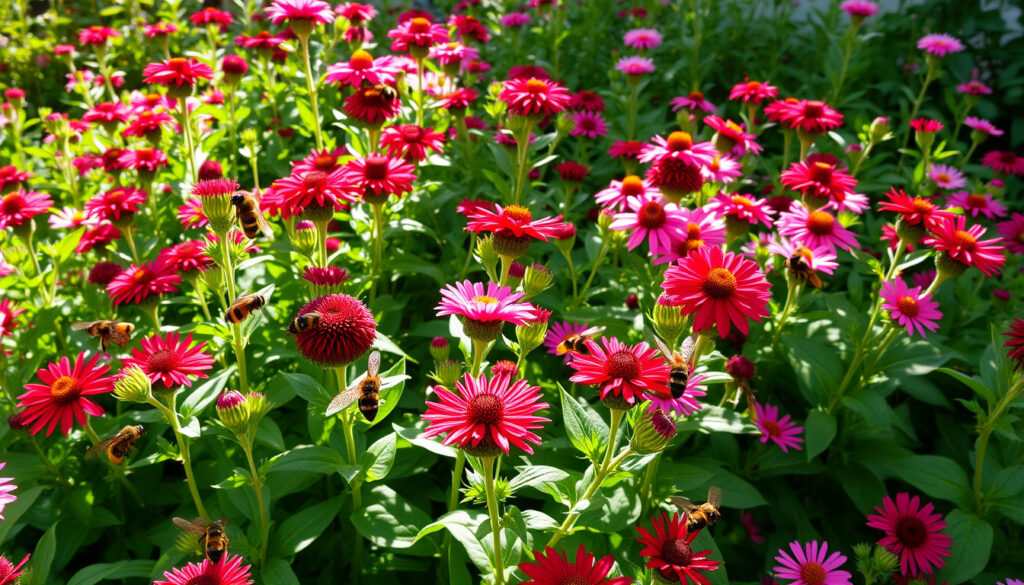
There’s a moment in midsummer when a bee balm patch becomes the busiest corner of the garden—hummingbirds jostling, bees bumbling, and a scent that seems to echo the days of Oswego tea. But before you plant that nursery pot, there’s a quieter side to know: this pollinator magnet has a reputation for spreading faster than a weekend rumor, and it comes with a few maintenance quirks that separate first-year joy from long-term hassle.
Scientific name: Monarda ·
Plant type: Herbaceous perennial ·
Hardiness zones: 3–9 (USDA) ·
Sun requirement: Full sun to partial shade ·
Height: 2–4 ft (0.6–1.2 m) ·
Bloom time: Mid to late summer
Quick snapshot
- Returns every year as a herbaceous perennial (Iowa State University Extension and Outreach)
- Prefers full sun but tolerates partial shade (American Meadows)
- Susceptible to powdery mildew in humid conditions (Iowa State University Extension and Outreach)
- Attracts bees, butterflies, and hummingbirds (DutchGrown)
- Exact invasive potential varies by specific climate and soil
- Long-term effects on native UK flora are not fully documented
- Best planted in spring or early fall (American Meadows)
- Blooms midsummer to early fall (DutchGrown)
- Divide clumps every 2–3 years in early spring (Iowa State University Extension and Outreach)
- Regular watering during dry spells
- Deadhead to encourage repeat blooms
- Divide in spring to manage spread and rejuvenate clumps
Ten key facts about bee balm, drawn from university extension services and specialty growers across the US and Europe.
| Botanical name | Monarda |
| Common names | Bee balm, bergamot, Oswego tea |
| Native range | North America |
| Sun | Full sun to partial shade |
| Soil | Moist, well-drained |
| Height | 2–4 ft |
| Spread | 2–3 ft |
| Bloom time | Mid to late summer |
| Attracts | Bees, butterflies, hummingbirds |
| Deer resistance | High |
Where is the best place to plant bee balm?
Should bee balm be planted in pots or ground?
- In the ground: spreads vigorously but can be contained with barriers or regular division (Iowa State University Extension and Outreach)
- In pots: limits spread; use a container at least 12 inches deep with drainage holes (DutchGrown)
- Potted bee balm may need winter protection in colder zones (USDA 3–5)
What soil conditions does bee balm prefer?
- Evenly moist, well-draining soil rich in organic matter (American Meadows)
- Tolerates clay if amended with compost
- Avoid waterlogged sites – leads to root rot
A gardener who chooses pots over ground trades free-spreading joy for tighter control – perfect for small gardens where bee balm’s rhizomes would overtake neighbors within two seasons.
The pattern: full sun gives compact growth and flowers; partial shade yields lankier plants with more mildew risk. If you only have a shady spot, bee balm will survive but the bloom show will be thinner.
What are the cons of bee balm?
Does bee balm spread aggressively?
- Spreads by underground rhizomes and self-seeding (American Meadows)
- Can become invasive in moist, fertile soils if not divided every 2–3 years (Iowa State University Extension and Outreach)
- In the UK, Monarda is non-native and can self-seed aggressively – some regions consider it potentially invasive (Royal Horticultural Society)
Is bee balm prone to powdery mildew?
- Powdery mildew is the most common disease, especially in humid, shaded spots (Iowa State University Extension and Outreach)
- Frequent or heavy fertilization increases succulent growth and worsens mildew
- Good air circulation and resistant cultivars (e.g., ‘Jacob Cline’, ‘Raspberry Wine’) reduce risk
The very qualities that make bee balm a pollinator powerhouse – vigorous growth, generous flowering – also demand a disciplined gardener willing to lift and divide every few years.
The catch: bee balm’s spread is not a flaw but a feature of its mint-family heritage. The trade-off is spectacular color and wildlife value for regular maintenance.
Upsides
- Exceptional pollinator magnet – bees, butterflies, hummingbirds (DutchGrown)
- Deer resistant (American Meadows)
- Long bloom period (midsummer to early fall)
- Hardy perennial – returns each year in USDA zones 3–9 (Iowa State University Extension and Outreach)
- Edible flowers and leaves (Oswego tea)
Downsides
- Aggressive spread via rhizomes and self-seeding (American Meadows)
- Prone to powdery mildew in humid or shaded settings (Iowa State University Extension and Outreach)
- Needs division every 2–3 years to maintain vigor
- Shorter lifespan without regular division – centers die out
- Foliage can look tattered by late summer if mildew develops
Does bee balm come back each year?
How does bee balm overwinter?
- Herbaceous perennial: dies back to ground in winter, regrows from roots in spring (Iowa State University Extension and Outreach)
- Hardy in USDA zones 3–9 – no special winter protection needed in most regions
- Cut back dead stems in late fall or early spring
When should you cut back bee balm?
- Cut back to 2 inches above ground after first frost or in early spring before new growth
- Deadhead spent flowers throughout summer to encourage rebloom (American Meadows)
- Leave some seed heads for winter bird food
The implication: a gardener who neglects cutting back may still get regrowth, but mildew spores overwintering on old stems will make the next season harder.
Is bee balm invasive in the UK?
How does bee balm spread in British gardens?
- Monarda is non-native to the UK, originally from North America
- Can self-seed prolifically and spread via creeping rhizomes (Royal Horticultural Society)
- Considered potentially invasive in some UK regions, especially in damp, rich soils
Are there native alternatives to bee balm in the UK?
- UK natives: Betony (Stachys officinalis), Meadowsweet (Filipendula ulmaria), and Viper’s bugloss (Echium vulgare) are pollinator-friendly and non-invasive
- Monarda fits best in contained borders or large pots to prevent escape
Why this matters: for UK gardeners, bee balm offers a burst of North American color but comes with a responsibility to contain its spread – or risk letting it elbow out native wildflowers.
What not to plant next to bee balm?
Which plants compete poorly with bee balm?
- Avoid weak or slow-growing perennials – bee balm will outcompete them (American Meadows)
- Small alpine or ground-hugging plants get swamped by bee balm’s spread
- Low-growing annuals may be smothered
Does bee balm harm nearby vegetables?
- No allelopathic effect – it doesn’t chemically harm vegetables
- But its dense habit can shade shorter crops if planted too close
- Good neighbors: coneflower (Echinacea), black-eyed Susan (Rudbeckia), salvia, and ornamental grasses
The pattern: pairing bee balm with other robust, upright perennials creates a prairie-like community where no single plant dominates. Avoid pairing with timid neighbors.
How to plant bee balm step by step
- Choose the site – full sun (at least 6 hours direct sun daily) with moist, well-drained soil (Iowa State University Extension and Outreach)
- Prepare the soil – incorporate 2–3 inches of compost or well-rotted manure to improve moisture retention and fertility
- Spacing – set plants 18–24 inches apart to allow for spread and air circulation (DutchGrown)
- Planting depth – set at the same depth as the nursery container; for bare roots, soak in water for 3–6 hours before planting
- Water in – soak thoroughly after planting, then water every 7–10 days during dry spells, soaking to 6–8 inches depth (Iowa State University Extension and Outreach)
- Fertilize lightly – apply a balanced 10-10-10 fertilizer in early spring; avoid over-fertilizing to reduce mildew risk
- Mulch – add 2 inches of organic mulch to retain moisture and suppress weeds, but keep mulch away from stems
What we know and what’s still uncertain about bee balm
Confirmed facts
- Bee balm is a perennial that returns each year from its root system (Iowa State University Extension and Outreach)
- Prefers full sun but tolerates partial shade (American Meadows)
- Susceptible to powdery mildew in humid conditions (Iowa State University Extension and Outreach)
- Attracts bees, butterflies, and hummingbirds (DutchGrown)
- Deer resistant (American Meadows)
- Belongs to the mint family (Lamiaceae) (Wikipedia)
What’s unclear
- Exact invasive potential varies by specific climate and soil conditions
- Long-term effects on native UK flora are not fully documented
- Variation in mildew resistance among cultivars relative to local conditions
What the experts say
“Bee balm does best in evenly moist, well-draining soil rich in organic matter.”
American Meadows (US-based wildflower and perennial nursery)
“Bee balm performs best in full sun. Plants grown in partial shade tend to stretch and become leggy over time.”
Iowa State University Extension and Outreach (horticultural advisory service)
For more information on this topic, check out the significat dels ocells de ploma lletres.
The takeaway for gardeners
Bee balm delivers one of the most vivid pollinator displays a perennial can offer, but its aggressive spread and mildew vulnerability mean it’s not a set-and-forget plant. For UK gardeners mindful of invasiveness, a dwarf cultivar in a large container gives the same hummingbird-attracting power without the risk of escape. For US gardeners in zones 3–9 with space to spare, bee balm can become the backbone of a prairie-style border – as long as you mark your calendar for a spring division every two years. The choice is clear: a little discipline in exchange for a lot of life.
Related reading: Leek and Potato Soup Recipe: 5 Chef Variations & Calorie Guide · Can Cats Eat Strawberries? Safety, Risks & Prep Tips
blythewoodbeecompany.com, highcountrygardens.com, facebook.com
Frequently asked questions
How do you care for bee balm in winter?
Cut back dead stems to 2–3 inches after the first frost. Apply a light mulch in colder zones (3–5) for root protection. No watering needed during dormancy.
Can you grow bee balm from seed?
Yes, but seeds need cold stratification for 1–2 weeks. Start indoors 8–10 weeks before last frost, or direct sow in fall. Germination is slow and variable.
When should you prune bee balm?
Prune in early spring before new growth appears. Deadhead spent flowers throughout summer to encourage repeat blooms.
What are the best companion plants for bee balm?
Good companions include coneflower (Echinacea), black-eyed Susan (Rudbeckia), salvia, lavender, and ornamental grasses. Avoid low-growing or weak perennials.
Is bee balm toxic to pets?
Bee balm is non-toxic to dogs, cats, and horses according to the ASPCA. However, ingesting large quantities may cause mild digestive upset.
How do you divide bee balm?
Dig the entire clump in early spring. Use a sharp spade to cut it into sections, each with at least 3–5 shoots and healthy roots. Replant divisions 18–24 inches apart.
What causes powdery mildew on bee balm?
High humidity, poor air circulation, and shade create ideal conditions. Avoid overhead watering, space plants generously, and choose resistant varieties.
How often should you water bee balm?
Water deeply every 7–10 days during dry periods, soaking the soil to 6–8 inches. Container plants may need more frequent watering.
More related posts
 Judge Judy: Biography, Net Worth, Current Life & FAQs (2024)
 Tom Berenger Biography: From Platoon to Major League
 Chelsea Handler: 50 Cent Dating, Net Worth, Career Updates
 Joan Crawford Death: Cause, Last Words & Bette Davis Feud
 Norway National Football Team – Coach, Roster, History, 2026 WC
 Dhurandhar 2 Release Date – Confirmed for March 19, 2026
 Nightmare Before Christmas LEGO Set 21351: Guide & Review
 Brigitte Macron: Biography, Age, Children & Hair Facts