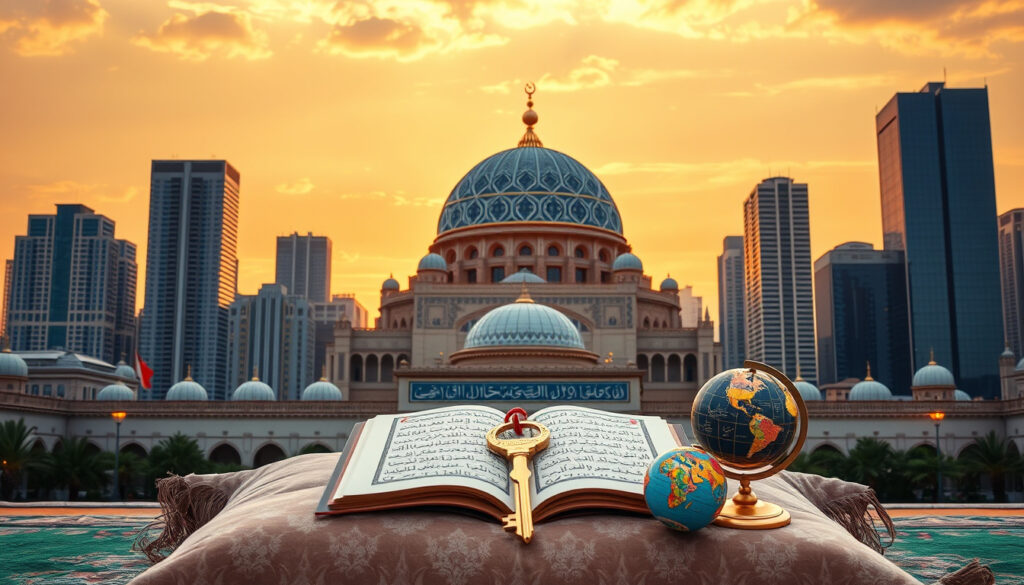
Aga Khan: Wealth, Faith, and Succession Explained
Few religious leaders have managed to sit atop both a spiritual throne and a business empire quite like the Aga Khan. Prince Shah Karim Al-Hussaini, the 49th hereditary Imam of the world’s 12–15 million Nizari Ismaili Muslims, died on 4 February 2025 in Lisbon, leaving behind a sprawling development network and a fortune that has been estimated anywhere from $800 million to $13 billion.
Full title: Prince Shah Karim Al-Hussaini, Aga Khan IV ·
Born: 13 December 1936, Geneva, Switzerland ·
Died: 4 February 2025, Lisbon, Portugal ·
Reign as Imam: 1957–2025 (68 years) ·
Followers worldwide: Estimated 12–15 million Ismaili Muslims ·
Net worth (estimated): USD 1–13 billion (various sources)
Quick snapshot
- 49th hereditary Imam of Nizari Ismaili Muslims AKDN (Ismaili Imamat)
- Born 1936, died 2025 Luxus Plus (obituary)
- Claims descent from Prophet Muhammad AKDN (Ismaili Imamat)
- Voluntary tithes (zakat) from followers RFE/RL (news analysis)
- Business investments (hotels, airlines, real estate) Ismaili Gnosis (community source)
- Inheritance from grandfather Aga Khan III Ismaili Gnosis (community source)
- Follow a living Imam (Aga Khan) as spiritual guide AKDN (Ismaili Imamat)
- Emphasize intellectual interpretation (ta’wil) AKDN (Ismaili Imamat)
- Prayer and fasting practices differ from Sunni and other Shia traditions AKDN (Ismaili Imamat)
- Chosen from among male descendants of the Imam AKDN (Ismaili Imamat)
- Prince Rahim Al-Hussaini named as 50th Imam (Aga Khan V) Luxus Plus (obituary)
- New imam receives title Aga Khan V Luxus Plus (obituary)
Seven key facts summarize the Aga Khan’s life and standing:
| Label | Value |
|---|---|
| Full name | Prince Shah Karim Al-Hussaini Luxus Plus (obituary) |
| Title | Aga Khan IV Luxus Plus (obituary) |
| Born | 13 December 1936, Geneva, Switzerland Luxus Plus (obituary) |
| Died | 4 February 2025, Lisbon, Portugal Luxus Plus (obituary) |
| Reign | 11 July 1957 – 4 February 2025 Luxus Plus (obituary) |
| Net worth (est.) | $800 million to several billion RFE/RL (news analysis) |
How did Aga Khan get so rich?
The Aga Khan’s wealth is often the first thing people ask about — and the numbers are genuinely dizzying. Estimates range from $800 million to $13 billion, depending on which assets are counted. But where did it all come from? Three main channels.
Sources of wealth: tithes, investments, and inheritance
- Voluntary tithes (zakat). Ismaili followers contribute a portion of their income (traditionally 12.5% of net worth, though practice varies) to the Imamat. According to RFE/RL (news analysis), these “tithe-style donations” flow into a central fund that supports both community needs and the Aga Khan Development Network.
- Business investments. Over decades the Imamat built a portfolio of hotels (the Serena chain), airlines (Air India was once partly owned), and real estate. Ismaili Gnosis (community source) notes that these investments are held separately from the tithe system and belong to the Imamat, not the Imam personally.
- Inheritance. The Aga Khan IV inherited a substantial fortune from his grandfather, Aga Khan III, including landholdings and business interests in Pakistan, India, and Africa. The same community source says this inheritance formed the seed capital for later expansion.
Role of the Aga Khan Development Network
The Aga Khan Development Network (AKDN) is often mistaken for a personal charity — but according to IsmailiMail (community blog), it is legally structured as “an endeavour of the Ismaili Imamat” rather than a private foundation. The AKDN operates schools, hospitals, cultural centres, and economic development programmes in over 30 countries, funded largely by the same tithe system. The Imamat’s assets are used for “community needs, investments, expenses, and the AKDN operating budget,” per Ismaili Gnosis.
The Aga Khan’s personal wealth — from horse breeding, private investments, and inheritance — is kept “entirely separate” from the community tithes, according to Ismaili Gnosis. The catch: because the Imam is the head of the Imamat, public perception often blurs the two.
Estimated net worth and controversies
No one knows the exact figure. RFE/RL reported estimates “between $800 million and several billion dollars.” Forbes once pegged it around $3.7 billion in 2008, though the Aga Khan never confirmed any number. The controversy stems from the opacity of the Imamat’s finances; critics question how much of the tithe money supports development versus the Imam’s lifestyle.
The pattern: the Aga Khan’s fortune operates on a dual-track model where personal and institutional wealth are legally separate but publicly indistinguishable, creating both transparency risks and operational flexibility.
How are Ismailis different from Muslims?
Ismailis are Muslims — specifically, a branch of Shia Islam. But they follow a living hereditary Imam (the Aga Khan) rather than relying solely on clerical scholars, and their practices diverge in several important ways.
Core beliefs of Nizari Ismaili Islam
- Imamat as perpetual leadership. According to the AKDN (Ismaili Imamat), Shia Muslims believe the office of religious leadership (Imamat) continues in perpetuity through a designated successor from the Prophet Muhammad’s family. For Nizari Ismailis, that successor is the Aga Khan.
- Intellectual interpretation (ta’wil). The AKDN states that the Imam’s role “involves religious interpretation” — meaning Ismailis are encouraged to apply reason and context to Quranic verses, a stance that often puts them at odds with more literalist Sunni traditions.
- Prayer and fasting. Ismaili prayers are performed three times a day (not five) and can be in any clean language, not just Arabic. Fasting during Ramadan is observed, but the sick and travellers are more flexibly exempted.
Differences in leadership and interpretation
Sunni Islam has no living infallible imam; leadership rests with scholarly consensus (ijma) and the caliph (historically). The AKDN emphasizes that the Ismaili Imam “guides the community in both spiritual and temporal matters” — a dual authority that cuts across the usual separation of mosque and state in mainstream Islam.
Practices: prayer, fasting, and pilgrimage
Pilgrimage for Ismailis is not limited to Mecca; they also venerate the shrines of their Imams. The key difference: Ismailis see the living Imam as the primary source of religious guidance, making them less dependent on hadith collections or the rulings of traditional muftis.
Four contrasts, one pattern: Ismailism puts an living, authoritative figure at the centre, while mainstream Sunni and Twelver Shia place scripture and clerical consensus first.
| Aspect | Mainstream Sunni / Twelver Shia | Nizari Ismaili |
|---|---|---|
| Ultimate religious authority | Quran, Hadith, scholarly consensus (ijma) | Living Imam (Aga Khan) |
| Prayer frequency | 5 daily prayers (salat) | 3 daily prayers (dua) |
| Language of prayer | Arabic | Any clean language |
| Interpretation of Quran | Literal or traditional tafsir | Intellectual (ta’wil) guided by Imam |
| Imamat after Prophet | Ended with caliphs (Sunni) or 12th Imam (Twelver) | Continues in hereditary line |
| Pilgrimage | Hajj to Mecca | Hajj to Mecca plus pilgrimages to Imam’s shrines |
The pattern: Ismaili Islam is not a separate religion — it is a distinctive Shia tradition that centralises authority in a living descendant of the Prophet. For a Sunni or Twelver Muslim, that is a radical shift.
The implication: the Ismaili model shifts religious authority from text to person, making the Imam’s interpretation binding in ways that mainstream Islamic traditions reserve for scholarly consensus.
What ethnicity are the Aga Khans?
The Aga Khans claim a lineage that traces back to the Prophet Muhammad through his daughter Fatima and son-in-law Ali. That makes the family ethnically diverse by definition — Arab roots, Persian heritage, and Indian connections.
Ancestry: descent from Prophet Muhammad
The AKDN states plainly that the Ismaili Imamat is a “hereditary office in succession from the first Imam, Hazrat Ali.” This claim is a matter of faith for Ismailis, not of genetic record.
Mixed heritage: Persian, Indian, and European
The Aga Khan IV was born in Geneva to a British mother (Joan Yarde-Buller) and an Indian-born father (Prince Aly Khan). He grew up speaking English and French, studied at Harvard, and held multiple citizenships. His grandfather, Aga Khan III, was born in Karachi and was a major figure in the Muslim League. “Ethnically diverse” is an understatement — the family reflects the global spread of the Ismaili community itself.
Nationality and citizenship
The Aga Khan IV held British citizenship by birth through his mother and later acquired Portuguese citizenship, ending his life in Lisbon. His successor, Prince Rahim Al-Hussaini (Aga Khan V), holds British and Portuguese passports as well. The Imamat itself is stateless; it is a “supra-national entity” per the AKDN.
The Aga Khan embodies an Arab lineage, a Persian family name, a British education, and a Portuguese residency — all while leading a community centred in South Asia, Central Asia, and East Africa. His ethnicity is a mirror of his followers’ diversity.
The catch: the Aga Khan’s transnational identity makes him a stateless spiritual leader whose authority transcends national boundaries, matching the global dispersion of his followers.
Why is Aga Khan so famous?
Fame comes from three overlapping roles: religious leader, global philanthropist, and wealthy lifestyle figure.
Religious leadership of Ismaili community
As the 49th hereditary Imam of the Nizari Ismailis, the Aga Khan was the spiritual and temporal guide for millions. The AKDN describes his role as guiding the community “in both spiritual and temporal matters” — a dual mandate that made him both a pope and a CEO for his followers.
Philanthropy and development work
The AKDN is one of the largest private development networks in the world, active in education, health, culture, and economic development. It runs the Aga Khan University in Karachi, the Aga Khan Academies network, and the Aga Khan Trust for Culture. IsmailiMail frames it as “an endeavour of the Ismaili Imamat to enact the ethics of Islam.”
Wealth and lifestyle
The Aga Khan was also known for his thoroughbred horses (his grey, Shergar, won the 1981 Epsom Derby), a 110-metre yacht, and properties from Sardinia to Portugal. This lifestyle — combined with the mystery of his net worth — made him a regular subject of tabloid interest. RFE/RL noted that wealth estimates were “impossible to verify because of the Imamat’s opaque structure.”
What this means: the Aga Khan’s fame rests on an unusual triple identity — spiritual guide, development CEO, and billionaire — that made him a uniquely modern religious figure whose influence spanned continents and sectors.
Who will inherit Aga Khan?
Succession in the Ismaili Imamat is a hereditary, closed-door process. The Imam designates his successor from among his male descendants, and the choice is revealed after his death.
Succession rules in Ismaili tradition
The AKDN says the Imamat is “a hereditary office in succession from the first Imam, Hazrat Ali.” The sitting Imam decides who will follow him. The designation (nass) is made in private and is binding. The Cecily Group (strategy consultancy) describes the process as “a mechanism for continuity rather than a moment of institutional risk” — a transition that has happened without interruption for over 14 centuries.
Potential candidates: Prince Rahim, Prince Hussain
The Aga Khan IV had three sons and a daughter. The eldest son, Prince Rahim Al-Hussaini (born 1971), was widely expected to succeed. He has been deeply involved in the AKDN as chairman of its environment and culture committees. Prince Hussain (born 1974) has focused on photography and conservation. Upon the Aga Khan’s death in February 2025, Luxus Plus reported that Prince Rahim “became the 50th hereditary Imam.”
Announcement and transition process
The AKDN officially named Prince Rahim as the 50th Imam, now styled Aga Khan V. The transition was smooth — no schism, no rival claims. The Cecily Group highlights that the Imamat’s institutional design made this “a seamless handover of both spiritual authority and development leadership.”
Prince Rahim Aga Khan V inherits not just a title but the chairmanship of the AKDN and control over Imamat assets worth billions. His biggest challenge: maintaining the trust of a global community whose tithes fund the network, while operating in an era of increased scrutiny on opaque religious finances.
Timeline of key events
- 13 December 1936 — Born in Geneva, Switzerland Luxus Plus (obituary)
- 11 July 1957 — Became 49th Imam at age 20 Luxus Plus (obituary)
- 1967 — Founded Aga Khan Foundation AKDN (Ismaili Imamat)
- 1980s–2000s — Expanded AKDN globally AKDN (Ismaili Imamat)
- 4 February 2025 — Died in Lisbon, Portugal Luxus Plus (obituary)
Confirmed facts vs. What’s unclear
Confirmed facts
- Aga Khan IV was the 49th hereditary Imam of Nizari Ismaili Muslims AKDN (Ismaili Imamat)
- He died on 4 February 2025 in Lisbon Luxus Plus (obituary)
- He was born in Geneva in 1936 Luxus Plus (obituary)
- The Imamat is a hereditary office from Hazrat Ali AKDN (Ismaili Imamat)
- Prince Rahim Al-Hussaini succeeded as Aga Khan V Luxus Plus (obituary)
What’s unclear
- Exact net worth (estimates range from $800M to $13B)
- Precise breakdown between personal and Imamat assets
- Specific number of Ismaili followers worldwide
- Whether the Aga Khan V will maintain the same balance of spiritual and business leadership
What other sources say
The Imam’s role is to guide the community in both spiritual and temporal matters.
Aga Khan IV, as paraphrased by AKDN (Ismaili Imamat)
He was the 49th hereditary imam of the Shia Ismaili Muslims, a spiritual leader whose wealth and development work made him a global figure.
Luxus Plus obituary
The pattern: The Aga Khan’s own words frame his role as dual — spiritual and temporal — while external obituaries focus on the wealth-philanthropy paradox. Both perspectives are true, and the tension between them is what defines his legacy.
Related reading
- Hailey Bieber Net Worth 2025 — another look at high-profile personal wealth
- Kid Rock Net Worth 2024 — contrasting celebrity financials
While the Aga Khan’s succession is rooted in Ismaili tradition and hereditary designation, Prince George of Wales occupies a fixed position in the British line of succession, offering a contrasting model of dynastic inheritance.
Frequently asked questions
What is the Aga Khan Development Network?
The AKDN is a network of development agencies founded by the Aga Khan, focusing on education, health, culture, and economic development in over 30 countries. It is funded by the Ismaili Imamat and voluntary contributions from followers. AKDN (Ismaili Imamat)
How many Ismailis are there worldwide?
Estimates vary between 12 and 15 million, but the community is spread across more than 25 countries, with large populations in Pakistan, India, Tajikistan, and East Africa. Exact census data is not available.
Where did the Aga Khan live?
The Aga Khan IV spent much of his life in France (Chantilly), Switzerland, and later Portugal, where he passed away in Lisbon. He held British and Portuguese citizenship. Luxus Plus (obituary)
What is the Aga Khan’s relationship with the Prophet Muhammad?
The Aga Khan claims descent from the Prophet Muhammad through his daughter Fatima and son-in-law Ali. Ismailis believe this lineage gives the Imam spiritual authority. AKDN (Ismaili Imamat)
Is the Aga Khan considered a prophet?
No. Ismailis believe Muhammad is the last prophet. The Aga Khan is the Imam — a spiritual guide and interpreter of the Quran, not a prophet.
What is the role of the Aga Khan in Ismaili daily life?
The Aga Khan provides religious guidance, sets community policies, and oversees the AKDN. Devout Ismailis may consult his farmans (edicts) on matters from prayer to education. AKDN (Ismaili Imamat)
How is the Aga Khan chosen?
The sitting Imam designates his successor from among his male descendants through a private process called nass. The name is revealed only after the Imam’s death. AKDN (Ismaili Imamat)
For the Ismaili follower, the question is not whether the new Aga Khan V will be wealthy — he will be. The real stake is whether he can maintain the trust that keeps the tithe system flowing while continuing the development work that defines his father’s legacy. Without that trust, the Imamat’s financial model — tithes plus investments — could unravel. For the outside observer, the story is clear: a 14-century-old religious office, built on faith, now depends on the delicate balance of transparency and authority.
More related posts
 William Shakespeare: Biography, Plays, Quotes, Legacy
 Work Permit Processing Time in Ireland: 2025 Guide
 Jonathan Scott: Illness, Relationship & Family Tragedy
 A&W Menu: Burgers, Breakfast, Prices & More (2025)
 How Many Cups in a Litre? Complete Conversion Guide
 Linnea Berthelsen: Biography, Languages, and Stranger Things Role
 Goldilock and the Three Bear : Story, Moral & Original Ver ion
 Kiss Members: Original Lineup, Deaths, Funerals, and Health Facts