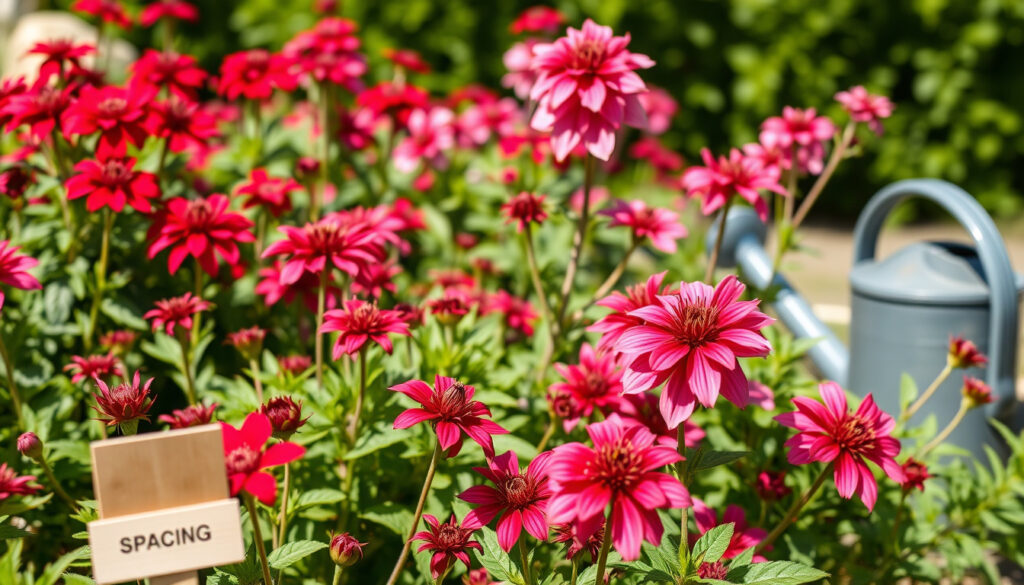
Bee Balm Planting Guide: Sun, Spacing & Mildew-Resistant Cultivars
Anyone who has watched a bee balm patch turn into a powdery white mess by midsummer knows the frustration. But with the right cultivar and a bit of planning, you can keep your Monarda blooming all season by pulling together university-backed advice on sunlight, spacing, and the most mildew-resistant varieties.
Full sun: 6+ hours daily · Spacing: 2 feet apart · Mildew-resistant cultivars: 10+ options from extension trials
Quick snapshot
- Bee balm needs at least 6 hours of direct sun per day (Iowa State University Extension).
- Space plants about 2 feet apart to improve airflow (Iowa State University Extension).
- Mildew-resistant cultivars include ‘Marshall’s Delight’, ‘Gardenview Scarlet’, ‘Violet Queen’, and ‘Raspberry Wine’ (Iowa State University Extension).
- The exact optimal spacing for different soil types — most guides recommend 18–24 inches, but heavier clay may require wider gaps (DutchGrown, a bulb supplier).
- How long individual cultivars maintain peak mildew resistance in different climates across the U.S. — Iowa State University Extension notes that resistant cultivars are available, but long-term regional data is limited.
- The optimal soil pH for bee balm is not consistently reported across university sources. (DutchGrown, a bulb supplier)
- Scarlet beebalm seeds germinate in 1–2 weeks (USDA Natural Resources Conservation Service).
- Indoor seedlings can be transplanted after 6–8 weeks (USDA Natural Resources Conservation Service).
- Monitor for powdery mildew starting in early summer; divide clumps every 3 years to maintain vigor (University of Minnesota Extension).
- Consider trying dwarf cultivars like ‘Pardon My Pink’ for tighter spaces (Iowa State University Extension).
The following table summarizes key growing recommendations from university sources.
| Factor | Recommendation | Source |
|---|---|---|
| Sunlight | Full sun, at least 6 hours direct | Iowa State University Extension |
| Spacing | About 2 feet apart | Iowa State University Extension |
| Soil moisture | Moist, well-drained | University of Minnesota Extension |
| Seed germination | 1–2 weeks | USDA NRCS |
| Indoor start time | 6–8 weeks before last frost | USDA NRCS |
| Outdoor sowing | Late winter through spring | USDA NRCS |
| Dwarf cultivars | ‘Petite Wonder’, ‘Pardon My Pink’, ‘Petite Delight’, ‘Pardon My Lavender’, ‘Pardon My Purple’, ‘Pardon My Cerise’ | Iowa State University Extension |
| Intermediate cultivars | ‘Grand Parade’, ‘Grand Mum’, ‘Grand Marshall’ | Iowa State University Extension |
Getting the Sun and Spacing Right
Bee balm is a sun-loving plant. The Iowa State University Extension and Outreach (horticulture guidance) states that it needs at least 6 hours of direct sun each day. Without enough light, plants become leggy and more prone to mildew.
Why spacing matters
- Space plants about 2 feet apart, per Iowa State University Extension.
- Gardening guides commonly recommend 18 to 24 inches to improve airflow and reduce mildew pressure (DutchGrown, a bulb supplier).
The trade-off: wider spacing means fewer plants per bed, but significantly lower disease risk. For home gardeners in humid regions, the 2-foot minimum is non-negotiable.
A crowded bee balm patch in the Midwest is a guaranteed powdery mildew nursery. Iowa State’s spacing recommendation of 2 feet isn’t just about aesthetics—it’s the single most effective cultural control against fungal disease.
The implication: proper spacing is the cheapest and most effective disease prevention strategy.
Choosing the Best Bee Balm Cultivars for Your Garden
Mildew resistance is the top trait to look for, and university trials have identified several winners. One pattern: many of the top performers are compact or dwarf forms that also improve airflow.
| Cultivar | Height | Flower Color | Mildew Resistance | Source |
|---|---|---|---|---|
| ‘Marshall’s Delight’ | ~3 ft | Hot pink | Good | Iowa State University Extension; Cornell Garden-Based Learning |
| ‘Gardenview Scarlet’ | ~3 ft | Scarlet | Good | Iowa State University Extension; Cornell Garden-Based Learning |
| ‘Violet Queen’ | ~3 ft | Violet | Good | Iowa State University Extension; Cornell Garden-Based Learning |
| ‘Raspberry Wine’ | ~3 ft | Raspberry-red | Good | Iowa State University Extension |
| ‘Blaustrumpf’ (‘Blue Stocking’) | ~3 ft | Blue-violet | Good | Cornell Garden-Based Learning |
| ‘Jacob Cline’ | ~3 ft | Large red | Fair (downy mildew) | NC State University Plant Toolbox |
| ‘Petite Delight’ (dwarf) | 10–12 in | Pink | Fair (downy mildew) | NC State University Plant Toolbox; Iowa State University Extension |
| Balmy™ Group | Compact | Various | Good | NC State University Plant Toolbox |
The implication: for home gardeners in the Midwest and Northeast, choosing ‘Marshall’s Delight’ or ‘Gardenview Scarlet’ from a Iowa State University Extension or Cornell Garden-Based Learning (a university horticulture program) list gives you a proven track record. Dwarf varieties like ‘Pardon My Pink’ let you fit bee balm into smaller borders without sacrificing resistance.
“Cultivars with good mildew resistance include ‘Marshall’s Delight’, ‘Gardenview Scarlet’, ‘Violet Queen’, and ‘Raspberry Wine’.”
— Iowa State University Extension and Outreach, Growing Bee Balm in the Home Garden
“Mildew-resistant bee balm varieties include ‘Blaustrumpf’ (‘Blue Stocking’), ‘Colrain Red’, ‘Gardenview Scarlet’, ‘Marshall’s Delight’, ‘Sunset’, and ‘Violet Queen’.”
— Cornell Garden-Based Learning, Home Gardening: Bee Balm
The pattern: university trials consistently favor compact and dwarf forms for both resistance and garden aesthetics.
Planting Bee Balm: Seeds vs. Transplants
You have two solid options, and the choice depends on your patience and climate. The USDA Natural Resources Conservation Service (plant guide for scarlet beebalm) gives clear timelines.
Option A: Direct sowing outdoors
- Sow seeds in late winter through spring, choosing a sunny site with adequate soil moisture and reduced weed competition (USDA NRCS).
- Seeds germinate in 1–2 weeks (USDA NRCS).
Option B: Start indoors
- Start seeds in flats or plug trays, then transplant after 6–8 weeks (USDA NRCS).
- This gives you a head start in short-season zones.
The catch: indoor starts require a bright, cool spot and hardening off. For northern gardeners, the 6‑ to 8‑week head start often means first-year blooms.
If you direct-sow, weed competition is the biggest threat until seedlings establish. The USDA NRCS emphasizes a clean seedbed — a single weeding session can save you a full season of frustration.
The catch: indoor starts require more effort but can yield first-year blooms in short-season zones.
Keeping Powdery Mildew at Bay
Powdery mildew is bee balm’s most persistent enemy. The University of Minnesota Extension (flower gardening resource) notes that bee balm is susceptible to it, and recommends full sun with moist soil as a first defense.
Three cultural controls
- Space plants 2 feet apart for airflow (Iowa State University Extension).
- Choose resistant cultivars from the table above.
- Water at soil level, not overhead, to keep foliage dry.
Why this matters: in a wet summer, untreated powdery mildew can defoliate a plant by August. The University of Minnesota Extension warns that once mildew appears, it’s hard to reverse without fungicides. For home gardeners, prevention through spacing and cultivar choice is the only reliable strategy.
The implication: prevention through spacing and cultivar choice is the only reliable strategy for home gardeners.
gardenary.com, peppershomeandgarden.com, gardenloversclub.com, mississippigreens.com, homesandgardens.com
Frequently asked questions
When is the best time to plant bee balm?
Spring is the ideal planting time, after the last frost. Seeds can be sown outdoors in late winter through spring, or started indoors 6–8 weeks before the last frost (USDA NRCS).
How much sun does bee balm need?
At least 6 hours of direct sun daily. Less sun leads to leggy growth and more powdery mildew (Iowa State University Extension).
How far apart should I space bee balm plants?
About 2 feet apart. This improves airflow and reduces the risk of powdery mildew (Iowa State University Extension).
Which bee balm varieties are resistant to powdery mildew?
Top choices from university trials include ‘Marshall’s Delight’, ‘Gardenview Scarlet’, ‘Violet Queen’, ‘Raspberry Wine’, ‘Blaustrumpf’, and the Balmy™ Group. Dwarf cultivars like ‘Petite Delight’ and ‘Pardon My Pink’ also have fair to good resistance.
Can I grow bee balm from seed?
Yes. Scarlet beebalm (Monarda didyma) seeds germinate in 1–2 weeks. You can direct-sow in spring or start indoors 6–8 weeks before transplanting (USDA NRCS).
How do I prevent powdery mildew on bee balm?
Provide full sun, space plants 2 feet apart, water at soil level, and choose mildew-resistant cultivars. Remove and destroy infected foliage in fall (University of Minnesota Extension).
Should I deadhead bee balm?
Deadheading spent flowers encourages reblooming and keeps plants tidy. Cut back to a leaf node.
How often should I divide bee balm?
Every 3 years to maintain vigor. Divide in spring or fall, replanting the healthiest outer sections.
More related posts
 Laura Clery: Accident, Sobriety, and Divorce Timeline
 Isabelle Weidemann: Canadian Speed Skater Career & Medals
 Milwaukee Bucks vs Toronto Raptors Match Player Stats
 Toronto Weather 14 Day – AccuWeather Forecast April 2026
 A&W Menu: Burgers, Breakfast, Prices & More (2025)
 Hop On Hop Off Toronto – Routes, Stops, Prices and Tips
 Ruby Liu: Billionaire Property Investor’s Hudson’s Bay Loss
 Chris Paul Retires After 21 Seasons: Stats, Height, Family